

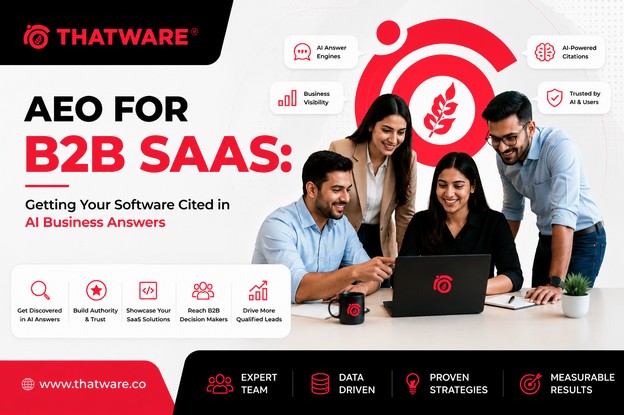
B2B SaaS buying decisions have always been research-heavy. No one impulse-purchases enterprise project management software or a $50k/year analytics platform. Buyers do months of research, compare vendors extensively, read reviews, consult peers, and increasingly — they ask AI.
That last point is the one that should be grabbing your attention right now.
How B2B SaaS Buyers Are Actually Using AI Today
The research phase for SaaS purchases has shifted meaningfully in the past couple of years. Buyers are routinely using ChatGPT, Perplexity, and Gemini to: generate shortlists of vendors in a category, compare features and pricing across competitors, understand use cases for specific types of tools, and get initial recommendations before they ever visit a vendor’s website.
This means there’s a layer of discovery happening that doesn’t show up in your Google Analytics, doesn’t get captured in your attribution model, and doesn’t register in your organic search data. A potential buyer might form a strong opinion about your product — or completely overlook you — before they’ve ever interacted with anything you’ve built.
That’s a significant problem if you’re not thinking about AI visibility. And it’s a significant opportunity if you are.
Why B2B SaaS Is Particularly Well-Suited for AEO
Here’s something counterintuitive: the complexity and specificity of B2B SaaS products actually makes them better candidates for AEO than simpler consumer products.
Why? Because AI systems, when asked specific questions, tend to surface specific answers. “What’s the best CRM for a small sales team that uses Gmail?” is a more answerable query than “what’s the best coffee.” The specificity of buyer queries in B2B SaaS means there’s more opportunity to own a well-defined answer space.
Your content can be the authoritative answer to “what are the main differences between [your category] platforms” or “which [tool type] works best for [specific workflow].” If you’ve structured your content well, AI systems can and do cite specific vendors in response to these questions. The brands that show up are the ones that have done the optimization work.
What AEO Actually Looks Like for a SaaS Brand
Getting your software cited in AI business answers isn’t magic. It’s methodical.
First, it starts with a thorough understanding of the question landscape. What are buyers in your category actually asking AI systems? This isn’t the same as keyword research — the queries are more conversational, more specific, and often more use-case-driven than what shows up in search volume tools. Good AEO work begins with mapping these questions exhaustively.
Second, your content needs to be architected to answer those questions at the passage level — meaning individual sections of a page or article can serve as standalone answers without requiring the reader (or the AI) to read the whole piece for context. This is a content structure discipline that most SaaS marketing teams haven’t developed.
Third, your entity presence needs to be established. AI systems are more likely to cite a brand they “know” — that exists as a recognized, well-defined entity in knowledge graphs and across credible third-party sources. For SaaS brands, this might mean ensuring consistent, accurate representation in category databases, G2 / Capterra profiles, LinkedIn company pages, Wikipedia (where warranted), and industry publications.
The Competitive Angle
Here’s the thing about B2B SaaS specifically: the category is crowded. In most software categories, there are 5–20 established competitors and dozens of emerging ones. Differentiation through traditional SEO has gotten harder as everyone has a content team and a backlink strategy.
AEO offers a genuinely differentiated opportunity right now — precisely because most SaaS companies haven’t invested in it yet. The brands that establish AI citation authority now, while the field is still relatively open, will have a structural advantage that compounds over time.
Think about it from an LLM’s perspective: it forms its sense of which vendors are credible, well-known, and worth recommending based on the information it has encountered. The more consistently your brand appears in high-quality, accurate, contextually relevant information across the web — including third-party sources — the more confident the model becomes in recommending you.
That’s not something a competitor can erase easily once you’ve built it.
Finding the Right Partner
Most content marketing agencies aren’t equipped for this work. Most SEO firms treat it as an extension of what they already do. What you actually need for sophisticated B2B SaaS AEO is a partner who understands both the technical structure of AI search systems and the nuanced buying journey of enterprise software buyers.
AEO services for B2B SaaS require that specific combination — not just content production, but strategic structuring of that content for AI discoverability, combined with entity-building and off-site authority work.
ThatWare has built meaningful depth in this area, with programs designed specifically for software and technology brands trying to compete in AI-driven discovery channels.
A Simple Starting Point
If you’re not sure where to begin, start with a manual audit. Take 10–20 queries that represent your buyers’ research questions — the kinds of things they might ask ChatGPT when evaluating tools like yours — and actually run them through major AI systems. Note whether your brand appears, how it’s described, and what competitors show up alongside you.
That exercise will give you a clear, concrete picture of where you stand. And if the result is that you’re largely invisible in AI answers, you now know that best AEO agency for SaaS partnerships are worth exploring seriously.
The buyers are asking. The question is whether your brand is part of the answer.